


Overview
Milk is not toxic to every dog, but many dogs have trouble digesting lactose. Lactose is a natural sugar found in milk. Some dogs can drink small amounts without problems, while others may develop digestive upset. A dog’s age, health, and tolerance can affect how they respond to milk.
You may wonder if sharing a little milk with your dog makes a safe treat. Your dog might enjoy the taste, but that does not mean milk suits their digestive system. Too much milk can cause problems such as diarrhea, gas, or stomach discomfort.
In this guide, you will learn whether dogs can drink milk and how much they may safely have. You will also learn about lactose intolerance, possible side effects, and safer options. These tips can help you make better choices about treats and drinks for your dog.
Can Dogs Drink Milk?
Yes, some dogs can drink small amounts of milk without problems. However, many dogs cannot digest lactose well. Lactose is the natural sugar in milk. Dogs that struggle to digest it may develop gas, loose stools, vomiting, or stomach discomfort after drinking milk.
Milk should not replace fresh water or a balanced diet. If your dog handles milk well, you can offer a small amount as an occasional treat. Start with a tiny portion and watch for digestive changes. Stop giving milk if your dog develops any unusual symptoms and contact your veterinarian if the symptoms continue.
Is Milk Safe for Dogs?
Milk can be safe for some dogs when they drink a small amount. However, many dogs have difficulty digesting lactose after they leave puppyhood. Dogs with lactose intolerance may develop gas, bloating, diarrhea, or vomiting after drinking milk. High-fat milk can also add extra calories to your dog’s diet.
If you want to offer milk, start with a small amount and watch your dog closely. Fresh water should remain your dog’s main drink. Stop giving milk if your dog develops digestive problems. Speak with your veterinarian if your dog shows repeated or severe symptoms after drinking milk.
Can Dogs Digest Milk?
Dogs can digest milk differently from one another. Puppies produce more lactase, the enzyme that breaks down lactose in milk. As some dogs grow, their bodies produce less lactase. This change can make milk harder to digest and may cause stomach problems.
A dog that handles lactose well may enjoy a small amount of milk without any issues. Other dogs may develop gas, bloating, loose stools, or vomiting. Watch your dog after giving milk for the first time. If digestive problems appear, stop offering milk and speak with your veterinarian if symptoms continue.
When Milk May Cause Digestive Problems
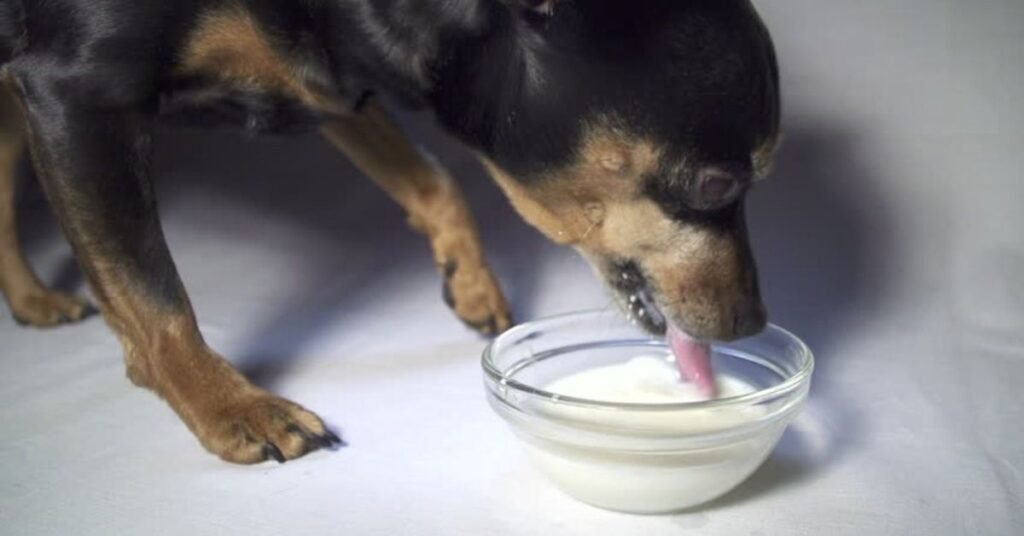
Milk may cause digestive problems when a dog cannot digest lactose properly. Some dogs produce less lactase as they grow, which makes lactose harder to break down. Large amounts of milk can also upset the stomach because milk contains fat and calories. Dogs with sensitive stomachs may react more easily.
Watch your dog for changes after drinking milk. Common signs can include:
- Gas or bloating
- Loose stools or diarrhea
- Vomiting
- Stomach discomfort
- Reduced appetite
If your dog develops mild symptoms, stop giving milk and provide fresh water. Contact your veterinarian if symptoms become severe, continue for a long time, or include repeated vomiting or diarrhea.
Benefits and Risks of Giving Milk to Dogs
Milk can provide some nutrients, including protein, calcium, and certain vitamins. However, dogs can get these nutrients from a complete and balanced diet. Some dogs can enjoy a small amount of milk as an occasional treat if they tolerate it well. Milk should never replace fresh water or regular dog food.
Milk can also cause problems for dogs that struggle to digest lactose. Large amounts can increase calorie and fat intake and may upset the stomach. Watch your dog after offering milk and stop if you notice digestive problems.
Possible benefits include:
- Provides calcium and protein
- Adds variety to an occasional treat
- Can suit dogs that tolerate lactose
Possible risks include:
- Diarrhea or loose stools
- Gas and bloating
- Vomiting
- Extra calories and fat
- Stomach discomfort
Clarify safe serving guidanceKeep the response to two paragraphs
Possible Nutritional Benefits
Milk contains nutrients such as protein, calcium, and some vitamins. These nutrients support bones and other body functions. However, dogs can get the nutrients they need from a complete and balanced dog food. Milk does not provide all the nutrients a dog needs for good health.
Some dogs can tolerate a small amount of milk without digestive problems. You can offer it as an occasional treat if your dog handles it well. Keep the portion small because milk also contains calories and fat.
Common Risks and Side Effects
Some dogs cannot digest lactose well. When these dogs drink milk, they may develop digestive problems. Large amounts can increase the risk of discomfort because milk contains lactose and fat.
Watch your dog after giving milk, especially if you offer it for the first time. Common signs may include:
- Gas or bloating
- Loose stools or diarrhea
- Vomiting
- Stomach discomfort
- Reduced appetite
Stop giving milk if your dog develops these symptoms. Contact your veterinarian if the symptoms continue or become severe.
When You Should Avoid Giving Milk
Avoid giving milk if your dog has shown signs of lactose intolerance or digestive upset after drinking it. You should also avoid using milk as a regular replacement for water or balanced dog food. Dogs with certain dietary or health needs may require extra care with treats and high-calorie foods.
If your dog has a sensitive stomach or follows a special diet, ask your veterinarian before offering milk. Your veterinarian can help you choose suitable treats based on your dog’s individual needs. Fresh water should remain your dog’s main source of hydration.
Read more for info: https://thepawtips.com/dhpp-vaccine-for-dogs/
What Types of Milk Can Dogs Drink?
Some dogs can tolerate small amounts of certain types of milk. However, no milk can replace fresh water or a complete dog diet. Cow’s milk contains lactose, which can cause digestive problems in dogs that cannot digest it well. You should always start with a small amount and watch your dog for signs of stomach upset.
Different milk products also contain different amounts of fat, sugar, and lactose. Plain, unsweetened options usually create fewer concerns than flavored or sweetened products. The table below provides a simple guide to common milk types.
| Type of Milk | Can Dogs Have It? | Important Consideration |
| Cow’s milk | Small amounts for some dogs | Contains lactose and may cause digestive upset |
| Goat’s milk | Small amounts for some dogs | Still contains lactose, so some dogs may react |
| Lactose-free milk | Small amounts | Removes or reduces lactose but still contains calories |
| Unsweetened plant milk | Depends on ingredients | Check the label and avoid harmful or added ingredients |
| Almond milk | Small amounts if plain and unsweetened | Avoid products with added sugar or unsafe ingredients |
| Oat milk | Small amounts if plain and unsweetened | Contains calories and may not suit every dog |
| Coconut milk | Small amounts | High-fat products may upset the stomach |
| Chocolate milk | No | Chocolate can be toxic to dogs |
| Flavored or sweetened milk | No | Added sugar and other ingredients can cause problems |
| Milk with xylitol | No | Xylitol can cause a dangerous drop in blood sugar in dogs |
Always check the ingredient list before sharing milk with your dog. If you have concerns about a specific milk product, ask your veterinarian before offering it.
What Happens If a Dog Drinks Too Much Milk?

Drinking too much milk can upset a dog’s digestive system. Many dogs cannot digest large amounts of lactose well. Your dog may develop gas, bloating, stomach pain, loose stools, or diarrhea. Some dogs may also vomit after drinking too much milk.
Milk can also add extra fat and calories to your dog’s diet. If your dog drinks a large amount, provide fresh water and monitor them closely. Stop offering more milk and contact your veterinarian if your dog has repeated vomiting, severe diarrhea, weakness, or symptoms that do not improve.
Safe Alternatives to Milk for Dogs
Fresh water remains the safest and most important drink for dogs. If you want to give your dog a special treat, you can offer small portions of dog-safe foods instead of milk. Plain cooked chicken, carrots, cucumber, or small pieces of apple can work as occasional treats. Remove seeds, cores, and other unsafe parts before serving fruit or vegetables.
You can also choose treats made specifically for dogs. Some pet stores offer lactose-free dog milk or specially formulated puppy milk products. Always check the ingredients before giving a new product to your dog. Avoid drinks that contain chocolate, caffeine, alcohol, xylitol, or excessive sugar. If your dog follows a special diet, ask your veterinarian before adding new treats.
How to Give Milk to Your Dog Safely
If your dog tolerates milk, start with a small amount. Choose plain milk without added sugar, flavors, or harmful ingredients. Give it as an occasional treat rather than a regular drink. Fresh water should remain your dog’s main source of hydration.
Watch your dog after giving milk. Look for signs such as gas, bloating, diarrhea, vomiting, or stomach discomfort. Stop giving milk if your dog develops these symptoms. If your dog has repeated or severe digestive problems, contact your veterinarian for advice.
Choose Plain Milk Without Added Ingredients
Choose plain milk if your dog can tolerate a small amount. Avoid flavored milk and products with added sugar. Some products may contain ingredients that can harm dogs. Always check the label before sharing any milk with your pet.
Plain milk still contains lactose and fat, so you should offer only a small portion. Do not use milk as a replacement for fresh water. If your dog has a sensitive stomach, start with a tiny amount and watch for gas, diarrhea, vomiting, or other digestive problems.
Final Thoughts
So, can dogs drink milk? Some dogs can enjoy a small amount without problems, while others may struggle to digest lactose. Milk can cause gas, diarrhea, vomiting, or stomach discomfort in sensitive dogs. Fresh water should always remain your dog’s main drink.
If you decide to offer milk, choose a plain product without added sugar or harmful ingredients. Start with a small amount and watch your dog for any reaction. If your dog develops repeated or severe symptoms, contact your veterinarian for guidance.
Frequently Asked Questions
1. Can dogs drink milk?
Some dogs can drink a small amount of milk without problems. Other dogs may develop digestive issues because they cannot digest lactose well.
2. What happens if a dog drinks too much milk?
Too much milk can cause gas, bloating, diarrhea, vomiting, or stomach discomfort.
3. What type of milk can dogs drink?
Dogs that tolerate milk can have a small amount of plain milk. Avoid flavored or sweetened milk and check the ingredients carefully.
4. Can puppies drink cow’s milk?
Cow’s milk does not provide the balanced nutrition that puppies need. Young puppies should receive their mother’s milk or a veterinarian-approved puppy milk replacer.
5. What should dogs drink instead of milk?
Fresh, clean water should remain your dog’s main drink. You can offer dog-safe treats instead of milk as an occasional reward.